The story behind VIBEONCHIP — vibe-coded hardware
Why I built it
I'd built loads of web things with AI and started wondering what happens if you let vibe coding leave the browser. I bought a small ESP32 display and simply wanted to see whether I could build real hardware the same way.
How it's built
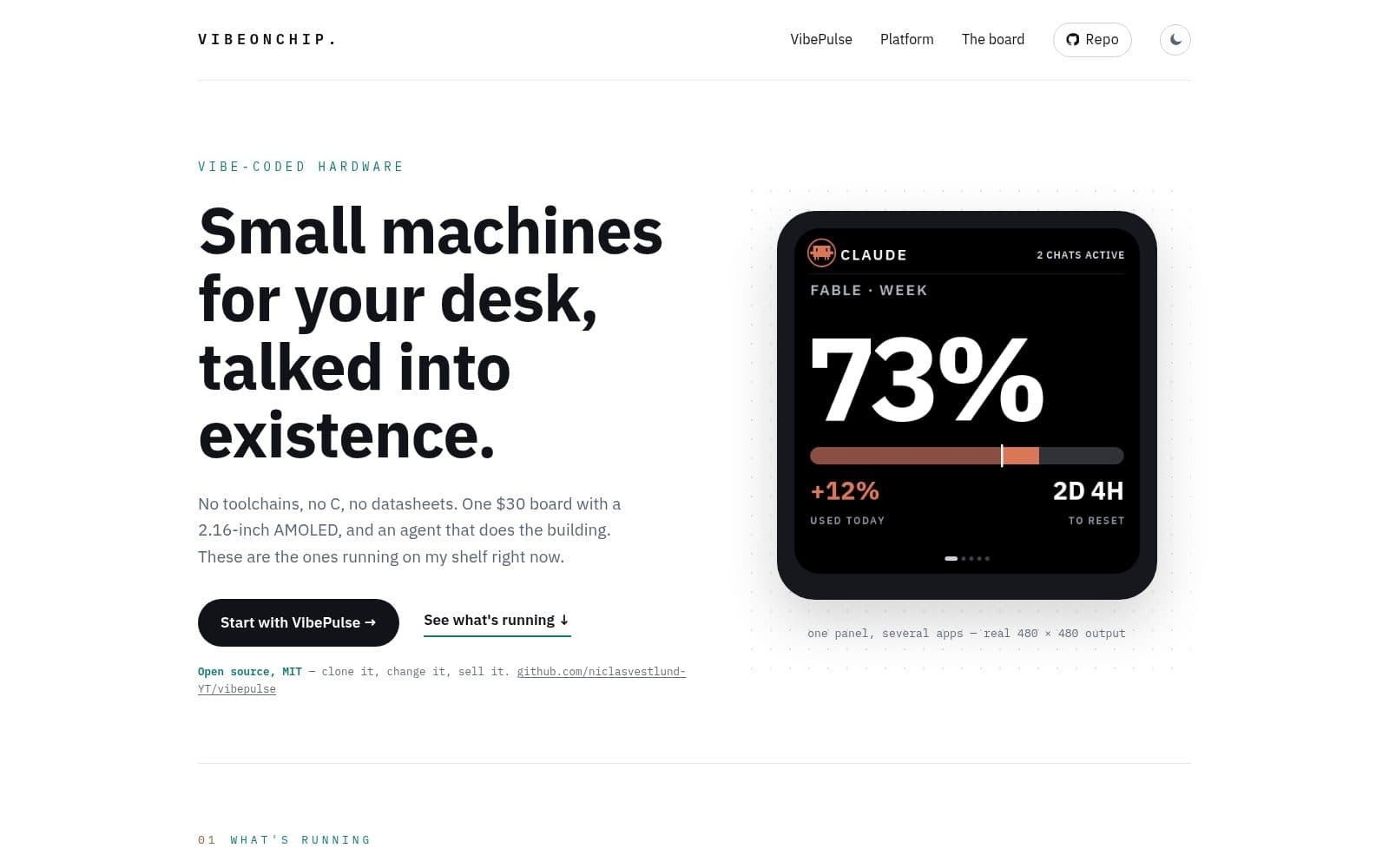
An ESP32-S3 with an AMOLED display that talks to a local service and shows data from my AI tools. The firmware, the Python parts and much of the experimenting are built together with Claude Code and Codex. VibePulse is open source, and VIBEONCHIP is becoming the home for the hardware builds.
The hardest part
Hardware punishes you in a different way than a website does 😄 Wrong resolution, memory, network, firmware or one cable, and suddenly nothing happens. I also can't lean on knowing the ESP32 beforehand, so a lot of it has been pure trial and error.
Up next
More hardware. I'm working on 3D-printed stands, physical feedback, more data sources and ideas around lights and other things that react to what the AI agents are doing. The goal is really to see how far you can take vibe coding beyond the screen.
About VibePulse (the one that is open source).
The problem
When you run coding agents all day, two things are invisible:
How much quota is left. You usually find out you're at the wall when a long task dies halfway through — not before you start it.
When an agent stopped. It asks one yes/no question and then just sits there. You're in another window. Sometimes for twenty minutes. Both answers already exist, buried in a terminal you're not looking at.
VibePulse moves them onto a screen you can't miss: one glance from across the room, no window to switch to, no menu bar to squint at.
Status: work in progress. This is an ongoing project for me and plenty of tweaks are still on the list, but enough people asked about it that I'm opening it up now rather than when it feels "done". Expect rough edges and frequent commits.